 |
| Alfama, Lisbon |
The
hilly roads and being not quite where the action was, were some reasons we were
initially hesitant to stay in Alfama area during our trip to Lisbon. However, our
location ended up to be great for us, being close to the trains we needed to
take for our day trips and away from the noisy bars when the fam wanted to rest in
the evenings. Alfama is one of the oldest neighborhoods in Lisbon that was not
heavily damaged in the earthquake/tsunami of 1755 that practically flattened
the other areas. During the Moorish occupation, Alfama was a poor area
populated by fishermen. Today, it is a labyrinth of narrow, cobbled streets and
steps where the architecture was kept intact. No skyscrapers are in sight, no
modern structure distract from its charm. During the day, we marveled at the cobbled streets, some showing some design or pattern and we looked in awe at the building facades decked with azulejos. Some evenings, sounds of Fado music
from the quaint cafes float its melancholic beauty through the neighborhood.
 |
| streets of Alfama |
 |
| azulejos-clad building being restored |
We
spent a couple of days in Alfama and Baixa-Chiado area. For most of the time,
we walked or took transit. But we also booked a TukTuk tour to be able to cover
more ground and take us through steep hills. We also did as tourists do and
took the Tram 28 which took us on a scenic ride across the city.
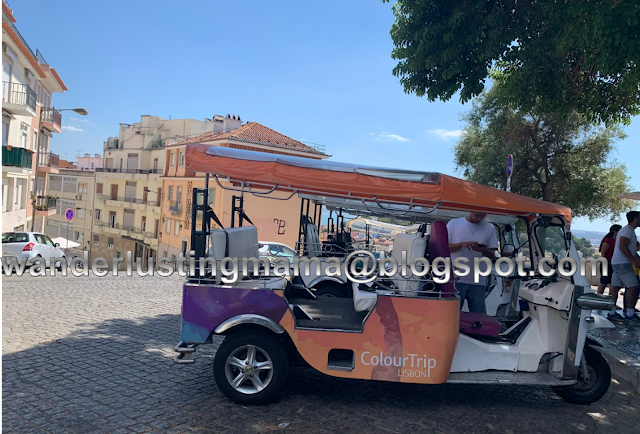 |
| one of many TukTuks in Lisbon |
 |
| the historic Tram 28 |
Some
of the things to see:
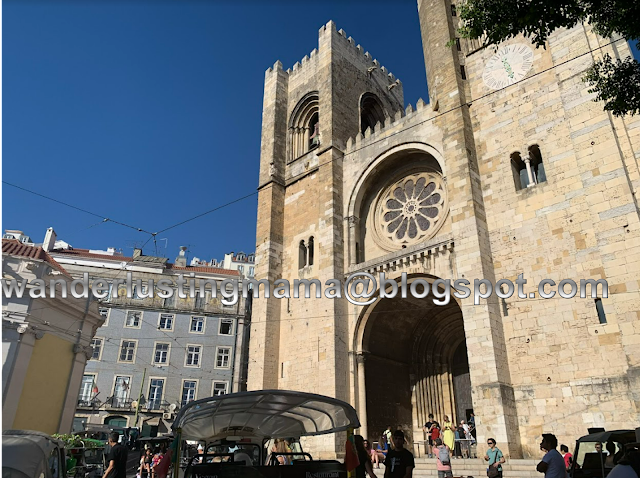
Sé de Lisboa (Lisbon Cathedral)—also called, Santa
Maria Maior, is the oldest church in the city. It is a beautiful church built
in the 12th century which has survived earthquakes, and battles and
has been restored several times. This is open to the public but there is a fee
to tour the cloisters.
 |
| Sé de Lisboa |
Across from the cathedral is the Igreja Santo
Antonio (Church of St. Anthony) which is dedicated to Portugal’s patron saint,
Saint Anthony. There you can find the crypt which marks where he was actually
born. A painted tile also showcases the visit of St. Pope John Paul II to this
crypt.
 |
| Igreja Santo Antonio |
Church of Santa Engrácia (Now National
Pantheon)—originally a church from the 17thC where construction
began and was not completed until the 20thC. It is now the Panteão
Nacional where important Portuguese personalities are buried, including
presidents, writers, singers and of course, football players.
 |
| Panteão Nacional |
Near the Pantheon and every Tuesday and Saturday,
they have the flea market (Feira da Ladra) where sellers display their goods on
small tables or on blankets along the square. It is said that markets such as
these have been in existence from the 12thC. There are artisan
goods and jewelry, ceramic ware, antiques, books, clothes, coins, and even azulejos
tiles (which are protected and supposedly can only be sold under special
permits). Some police roam the area to keep the peace but it seemed quite safe
to us. The colorful work of André Saraiva stands in the background by the wall
of the Jardim Botto Machado.
 |
| mural @Feira da Ladra |
Roman ampitheatre—close to the Lisbon
cathedral, the Teatro Romano de Lisboa features unearthed ruins of the ancient
Roman ampitheater. It is also free to visit!
 |
| Teatro Romano de Lisboa |
Castelo de São Jorge--The medieval Castle of
Sao Jorge stands atop the hills of Alfama. The fortified walls are quite
imposing. They were able to preserve the towers and the castle boasts a
wonderful viewpoint of the city.
 |
| entrance to Castelo de São Jorge |
If you are not able to make it to the castle,
some of the areas with beautiful vistas are:
Miradouro das Portas do Sol—has panoramic city
views where you can see the traditional red roofs and churches of Alfama.
Miradouro da Graça—one of the city’s famous
hills on the border of Graça and Alfama showing fantastic views of the city
rooftops and the Tagus river. Some of the beautiful sights you can see include the
Ponte 25 de Abril (25 de Abril Bridge) where cars and trains can cross over the
river. And across to Almada, you can also can catch a glimpse of the Christ the
Redeemer statue (inspired by the one in Rio de Janeiro) which is the monument
of the Santuário de Cristo Rei shrine dedicated to the Sacred Heart of Jesus Christ.
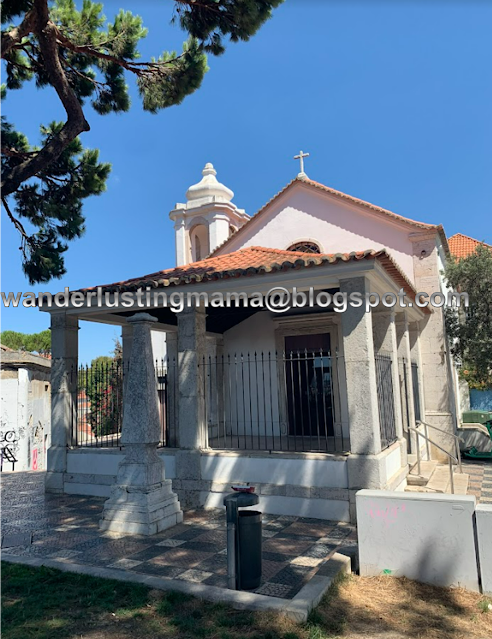
By the viewing area, you will find one of Lisbon’s oldest churches, the Chapel
of Our Lady of the Mountain, from the 13thC.
 |
| city views from Miradouro da Graça |
 |
| Chapel of Our Lady of the Mountain |
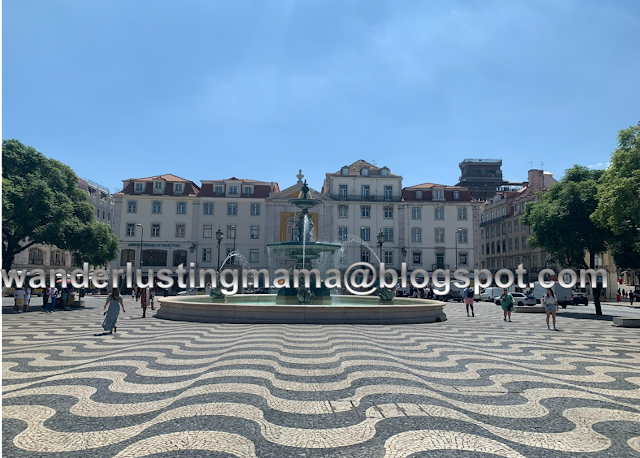
In Baixa-Chiado, we started from Rossio square
area. We walked through some of the bustling stores in Chiado down to Rua
Augusta. A mix of restaurants, stores, bakeries flank Rua Augusta culminating
in the Arco da Rua Augusta (Rua Augusta arch) on the
Praça do Comércio. The arch commemorates the city's reconstruction after the Great
earthquake.
 |
| Rossio Square |
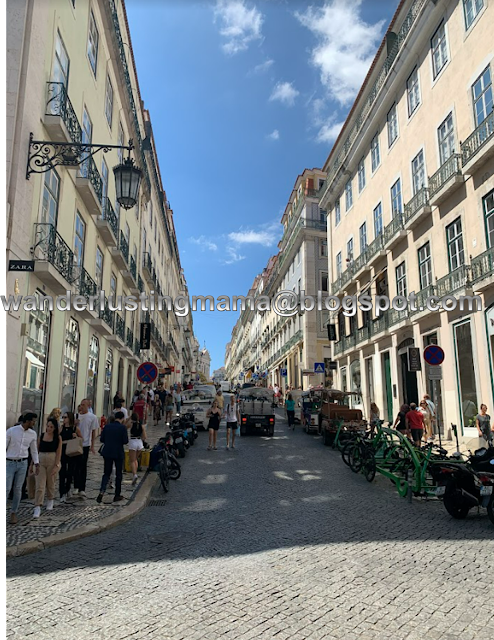 |
| Chiado area |
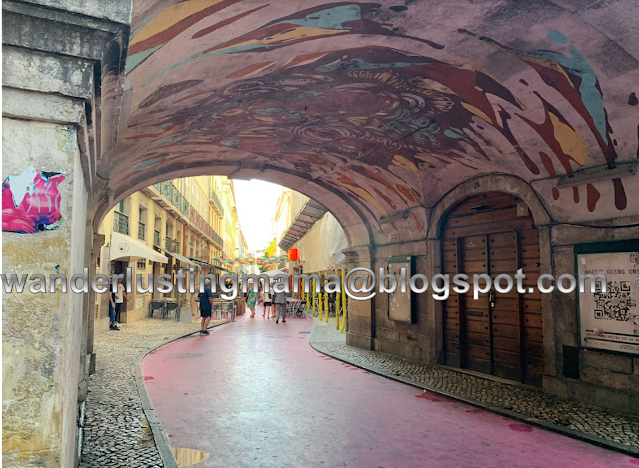 |
| the pink street, Lisbon |
 |
| Arco da Rua Augusta |
This area is more cosmopolitan and here you
can find stores of some of the popular European brands and as well many of the
goodies you would like to get (pasteis de nata, pastel de bacalhau, souvenirs,
and more). Tourists abound in this area and the streets are quite busy with patios
of restaurants and cafes. In Rua Garrett, you can also find the oldest
bookstore in operation. Bertrand Bookshop was first built in 1732 but was
reconstructed along with the rest of Lisbon after the 1755 Earthquake.
Baixa is the lower part while Chiado is the
higher part of the area. You can walk or take the Elevador de Santa Justa (Santa
Justa Lift), a historic elevator originally designed to help locals navigate
Lisbon’s hilly streets.
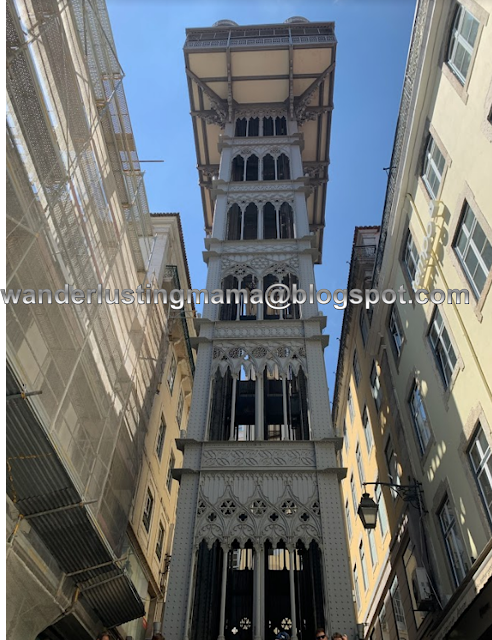 |
| Elevador de Santa Justa |
We couldn’t leave Lisbon, and Alfama, without catching
a Fado show. We booked a (cash-only) prix fixe dinner and show at O Corrido,
across the National Pantheon. While a bit on the pricey-side, the 3-course meal
with choice of appetizer, main dish and dessert was delicious. The
Fado music was truly wonderful. The Fado genre is characterized by melancholic
songs about longing, fate, destiny, typical of what the people would sing when
their sailors went out to sea (especially during the maritime voyages). O
Corrido featured 3 Fado singers, each doing a set of 3-4 songs. The music was
just so moving and the melody just cuts through even if we could not understand
the lyrics.
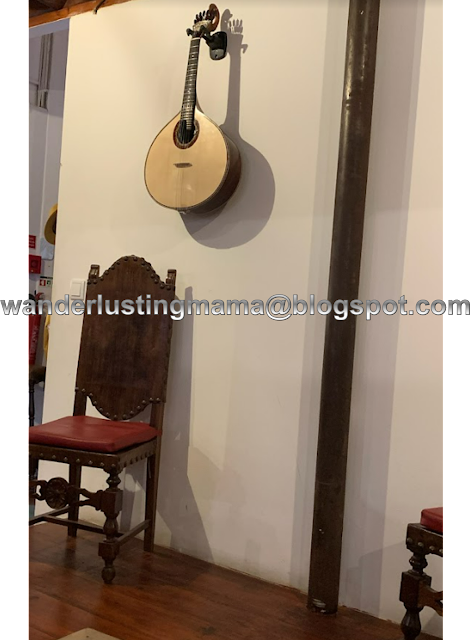 |
| @OCorrido, Alfama |
It was our first trip to Portugal. We made
Lisbon our home base and went to several day trips from there. Our itinerary
was packed and yet there were still so many more places to explore! And while
we thought we were only going to visit this place maybe once, we really hope to visit
many more times in the future. Eu amo Lisboa!


